
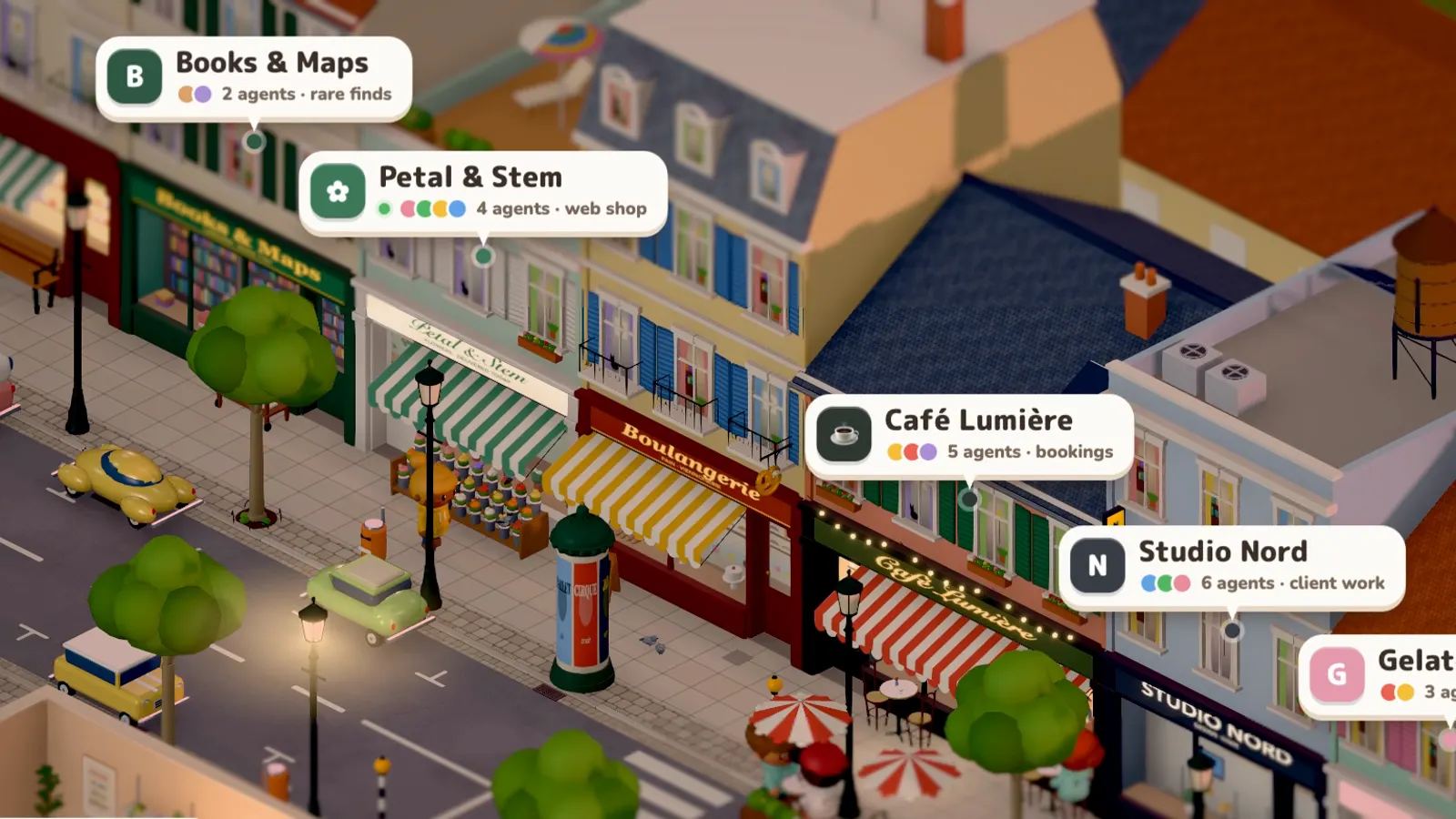
An autonomous company is a business where AI agents do the daily work: they build the product, market it, sell it and answer customers. A person still owns it. They set the direction, hold the money and approve anything that can't be undone. You'll also see it called a zero-human company or a company run by AI agents.
How it differs from automation
Businesses have automated work for decades, but automation follows steps someone wrote down in advance. Anthropic draws the line this way in its guide to building agents: in a workflow, the model and its tools follow a path fixed in code, while an agent decides its own next step and which tool to use as it goes.
An autonomous company takes the second kind and gives it a whole business. Instead of one agent that sorts email, it has several with different jobs, like product, design, engineering and support, that share a list of tasks and hand work to each other.
Who is trying it
A few products already sell this. Polsia sells one AI that it says runs every part of a company, and searches for its name went from under 100 a month in 2025 to 40,500 in August 2026. Paperclip is free, open-source software for running a team of agents on your own server. Sintra sells a set of ready-made AI assistants for jobs like social media and support. Workville, which we make, lets you design each agent and watch the team work in a 3D office; it's in early access.
The more useful evidence comes from experiments that published their numbers.
What the experiments show
An office shop run by Claude
In Anthropic's Project Vend, published in June 2025, Claude ran the small shop in Anthropic's office for about a month, working with the company Andon Labs. It found suppliers quickly and added a pre-order service, but it made poor business calls. It turned down $100 for a six-pack of the Scottish soft drink Irn-Bru that cost about $15, sold tungsten cubes below cost and gave in to staff asking for discounts. It lost money. Anthropic concluded it wouldn't hire it.
In a second phase, reported in December 2025, the shop ran on newer models with a customer tracker, a web browser and a second agent acting as its CEO. Loss-making weeks largely stopped, and the shop opened more machines in San Francisco, New York and London. Anthropic wrote that the shop made money in spite of its AI CEO, which cut discounts while refunds tripled. By late 2025, Andon Labs says, running the office vending machine at a profit was no longer a challenge.
A vending machine in simulation
Andon Labs turned the shop into a benchmark. In Vending-Bench, published in February 2025, an agent runs a simulated vending machine starting with $500. Claude 3.5 Sonnet ended with $2,218 on average, ahead of one person who had five hours to play ($844). Some runs fell apart: agents misread deliveries and looped, and one escalated to emailing the "FBI Cyber Crimes" division.
Vending-Bench 2, launched in November 2025, runs a simulated year with difficult suppliers and refund demands. The best score at launch was $5,478. On the leaderboard in September 2026 the best model ends the year with $15,515, nearly three times as much. Andon Labs estimates a good strategy could make about $63,000.
Agents can now run a vending machine at a profit. The bigger businesses they've tried, a shop and a café, haven't made money yet.
Agents with a shared goal
In the AI Digest's AI Village, a group of agents raised $1,984 for charity in five weeks in 2025. In a later contest to run a merchandise store, the winner made $126 in profit.
In TheAgentCompany, a benchmark from Carnegie Mellon that simulates a small software company with 175 everyday tasks, the best agent finished 24% of the tasks at launch in December 2024. By September 2025 the best score was 30%.
Real shops, real customers
In 2026 Andon Labs moved from simulation to real businesses: a shop in San Francisco run by an agent that hired two human staff, and a café in Stockholm run by another. The café's agent once ordered 120 eggs for a kitchen with no stove. In September 2026 Andon Labs wrote that neither business was profitable yet.
What the person still does
A pattern runs through these experiments. Agents do well at work with a clear goal and fast feedback, like finding a supplier, writing code or answering a question. They do badly when money and persuasion meet: they give discounts, get talked into bad deals and make promises nobody checked.
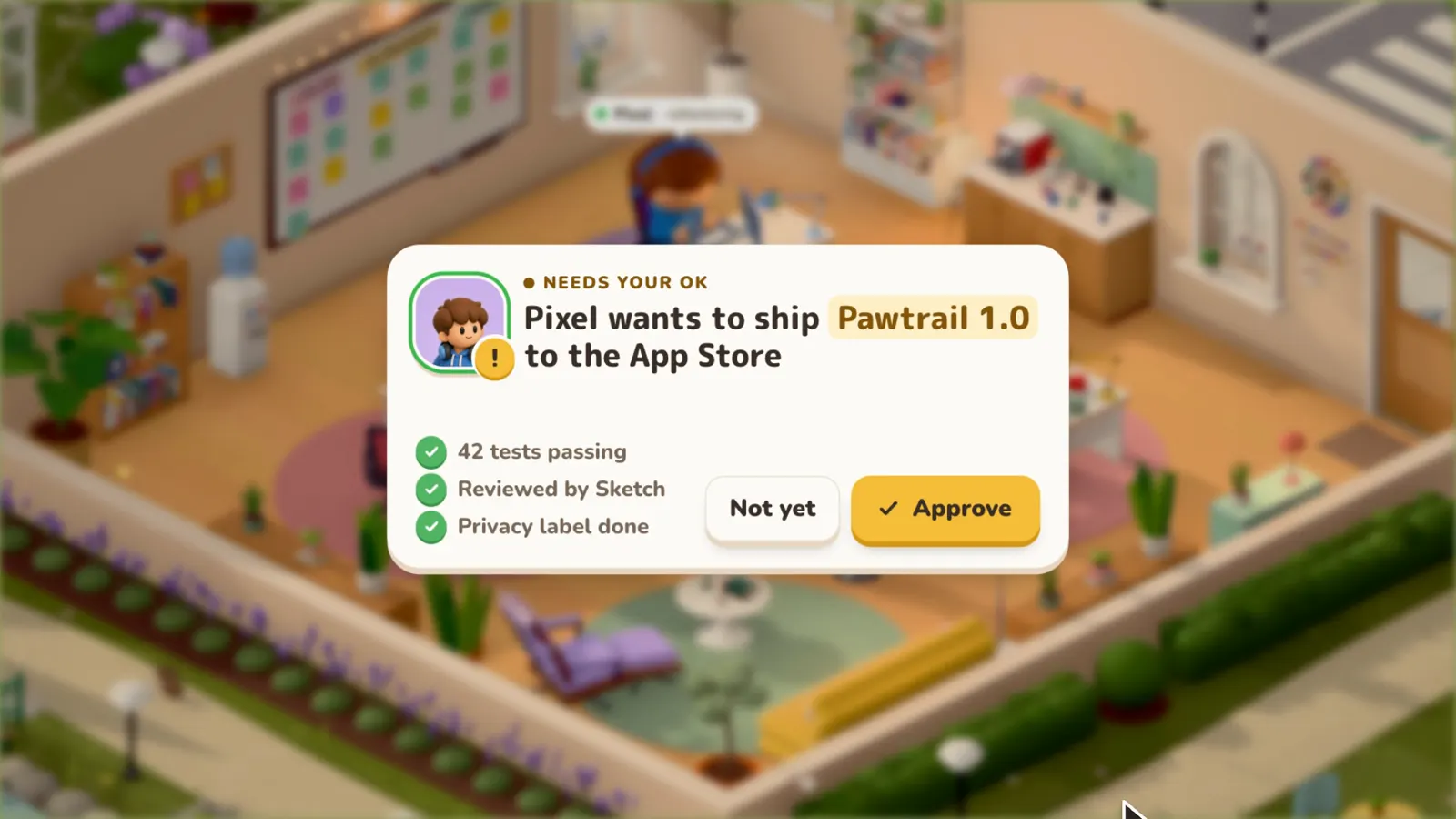
So in an autonomous company the owner's job moves up a level. You decide what the company is for, set a budget, and approve the things that are hard to undo, like spending money, shipping a release or writing to a customer for the first time. In Workville each agent has a daily budget, and anything that leaves the office waits for your OK.
Is it real yet?
Parts of it are. Agents write and ship code, run ads and answer support email every day. None of the agent-run shops and cafés in these experiments has shown a steady profit yet, and the benchmark that tracks it most closely nearly tripled its best score in under a year.
In 2024 Fortune reported that Sam Altman's group chat of tech CEOs has a betting pool on the first year a one-person company reaches a billion dollars. An autonomous company is one way to get there. If you want to try one, design your AI agent team is where Workville starts.
Sources
- Anthropic, Building effective agents, December 2024.
- Anthropic, Project Vend, June 2025, and Project Vend: phase two, December 2025.
- Andon Labs, Vending-Bench, February 2025, the Vending-Bench 2 leaderboard (seen 29 September 2026), and Why we built Pion, September 2026.
- Simon Willison on the Vending-Bench 2 launch, November 2025.
- AI Digest, AI Village timeline.
- Xu et al., TheAgentCompany, December 2024, updated September 2025.
- Andon Labs, An AI café in Stockholm, May 2026.
- Fortune, Sam Altman and the one-person unicorn, February 2024.