
"AI employee" and "AI agent" often describe the same software. An AI agent is the technology: a model that chooses its own steps and uses tools to finish a task. An AI employee is an agent packaged as a role, with a job title, a name and often a monthly price, so it can be hired the way you'd hire a person.
What an AI agent is
The companies that build the models define agents in similar terms. Anthropic separates workflows, where a model and its tools follow a path fixed in code, from agents, which decide their own next step and which tool to use. OpenAI describes agents as systems that complete tasks for you on their own. IBM's definition adds that an agent designs its own workflow from the tools it has.
In practice an agent is a loop. The model reads the task and what it knows so far, picks an action such as searching, writing code or sending a message, looks at the result, and goes again until the task is done or it needs help.
What sellers mean by an AI employee
"AI employee" is mostly a way to sell agents. A few examples, as they described themselves in September 2026:
| Company | What it sells | How it says it |
|---|---|---|
| Sintra | 12 named AI helpers for jobs like social media and customer support | "AI employees", $48.50 a month on a monthly plan |
| Artisan | Ava, an agent that finds and emails sales leads | AI employees for go-to-market teams; Ava is its "AI BDR" |
| Motion | Assistants for roles such as executive assistant, sales rep and project manager | "AI Employees" |
| Lindy | AI assistants for work, from $29.99 a user per month | An "AI teammate" |
| Salesforce | Agentforce, agents inside its CRM | A "digital labor platform" |
Selling agents as replacements for people has drawn pushback. In December 2024 Artisan put up billboards in San Francisco that said "Stop Hiring Humans". In September 2026 it apologized, retired the slogan for "Be More Human" and said it was hiring its first human sales rep.
What makes an agent work like an employee
An agent becomes useful as a colleague when it has the things a new hire gets:
- A role with a clear scope, so it knows which work is its own.
- Its own tools and accounts, with only the access the job needs.
- A way to remember what happened yesterday.
- Someone who checks its work, and rules for what it must ask before doing.
- A budget, because every step an agent takes costs money to run.
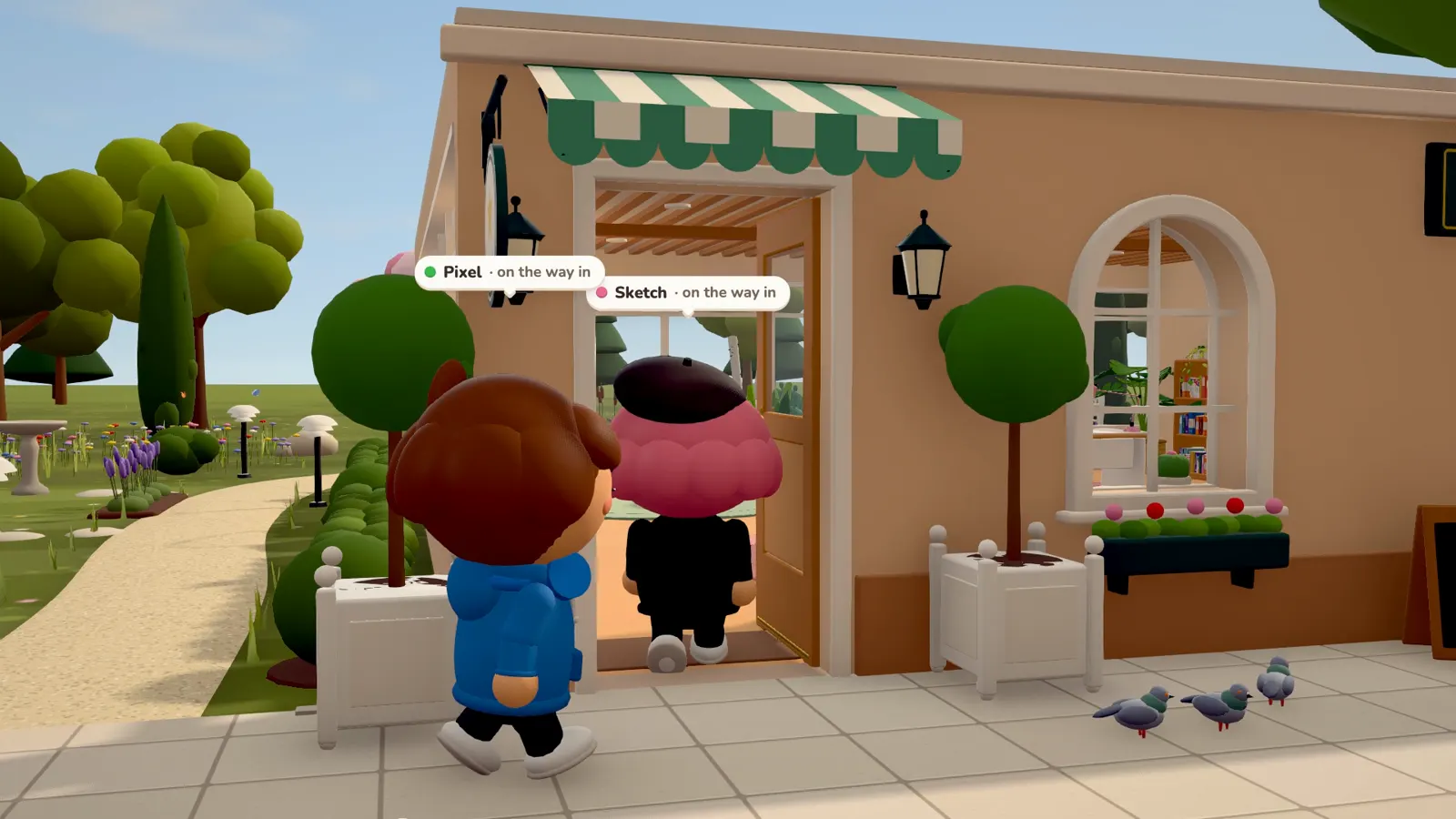
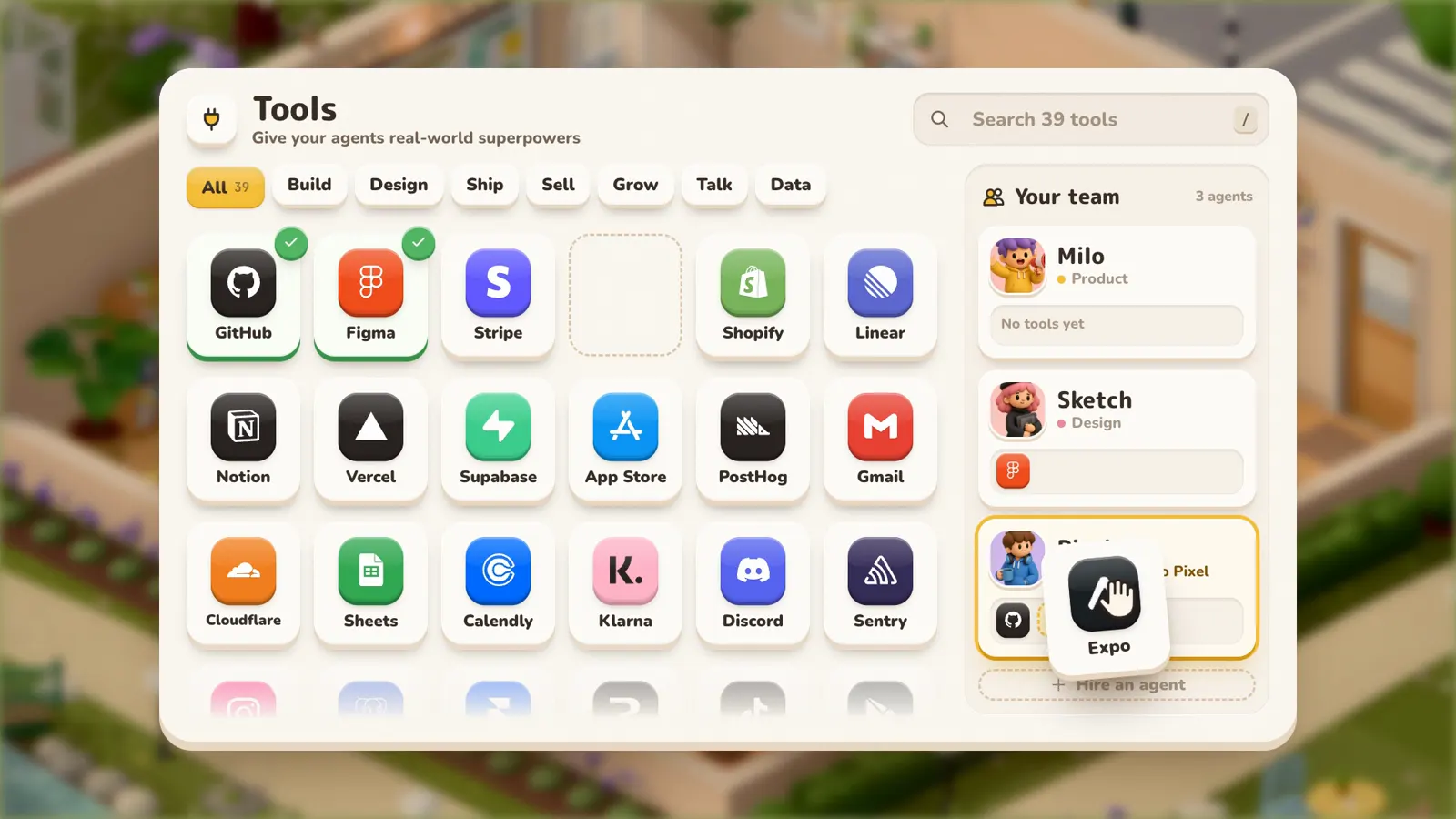
This is how Workville is built. You design each agent with a role, a personality, a model to think with, the tools for the job and a daily budget. Each one gets a desk in an office you can look in on, and anything that leaves the office waits for your OK.
How companies are using them
Microsoft's 2025 Work Trend Index found that 46% of business leaders say their company already uses agents to fully automate some work, and 82% expect to use what Microsoft calls digital labor within 12 to 18 months. Microsoft also coined the term "agent boss" for a person who builds agents, hands them work and manages them.
The forecasts are more careful. In June 2025 Gartner predicted that more than 40% of agentic AI projects will be cancelled by the end of 2027, and warned about "agent washing": older chatbots and automation tools rebranded as agents.
What to ask before you hire one
Whatever it's called, the questions are the same:
- What can it do on its own, and what does it ask you first?
- Which tools and accounts does it use, and whose are they?
- Who checks its work, and how do you see what it did?
- What does a task cost, and what stops the bill from running away?
Sources
- Anthropic, Building effective agents, December 2024.
- OpenAI, A practical guide to building agents, 2025.
- IBM, What are AI agents?
- Sintra, Artisan, Motion and Lindy, all seen 29 September 2026.
- Salesforce, Agentforce 2.0, December 2024.
- PetaPixel on Artisan's billboards, December 2024, and its change of slogan, September 2026.
- Microsoft, 2025 Work Trend Index, April 2025.
- RCR Wireless on Gartner's agentic AI forecast, June 2025.